How to Choose a Custom Mailbox That Complements Your Home’s Architecture

Tailor Mail Design Guide
Your mailbox is the first architectural statement visitors see when they arrive at your home. When chosen carefully, a custom mailbox extends your home’s design language all the way to the curb. When overlooked, it can disrupt the visual harmony of your façade and landscaping.
Whether you are updating a coastal Mediterranean property, refining a mid-century modern aesthetic, or building a contemporary luxury home in Southeast Florida, your mailbox should look intentional. This guide walks you through the essential decisions for matching a custom mailbox to your home’s architecture.
Assess Your Home’s Primary Style
The most successful curb-appeal upgrades treat the mailbox as a small-scale reflection of the main house. Before reviewing individual mailbox models, identify the dominant architectural style of your property.
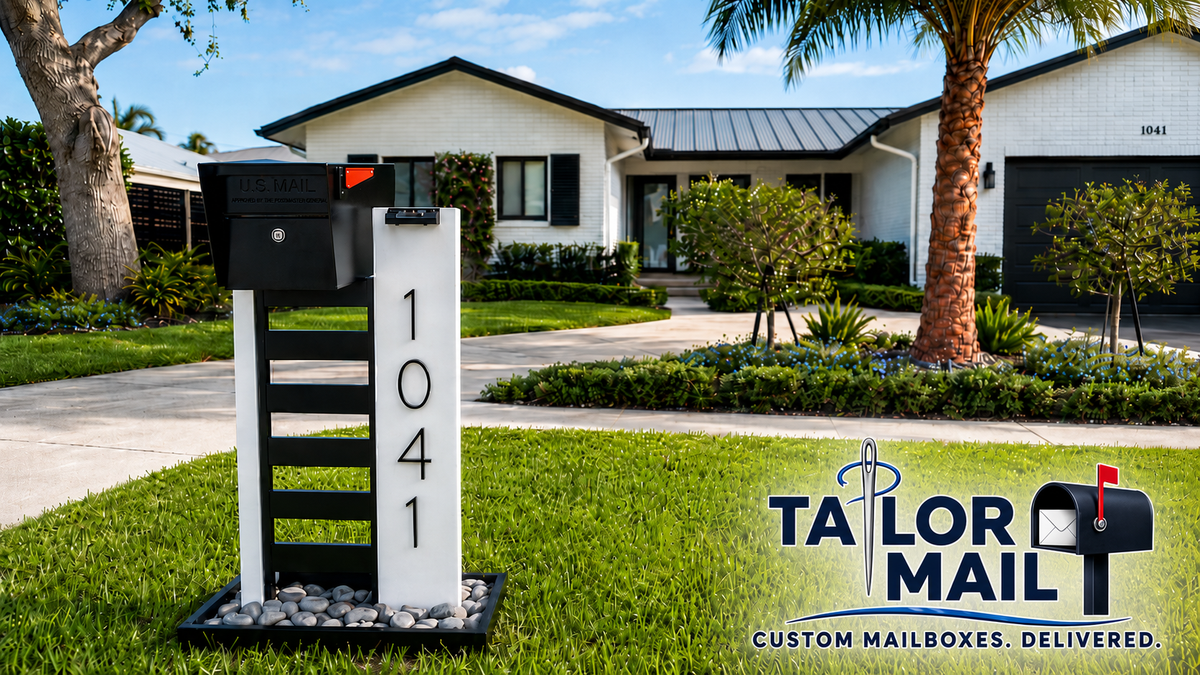
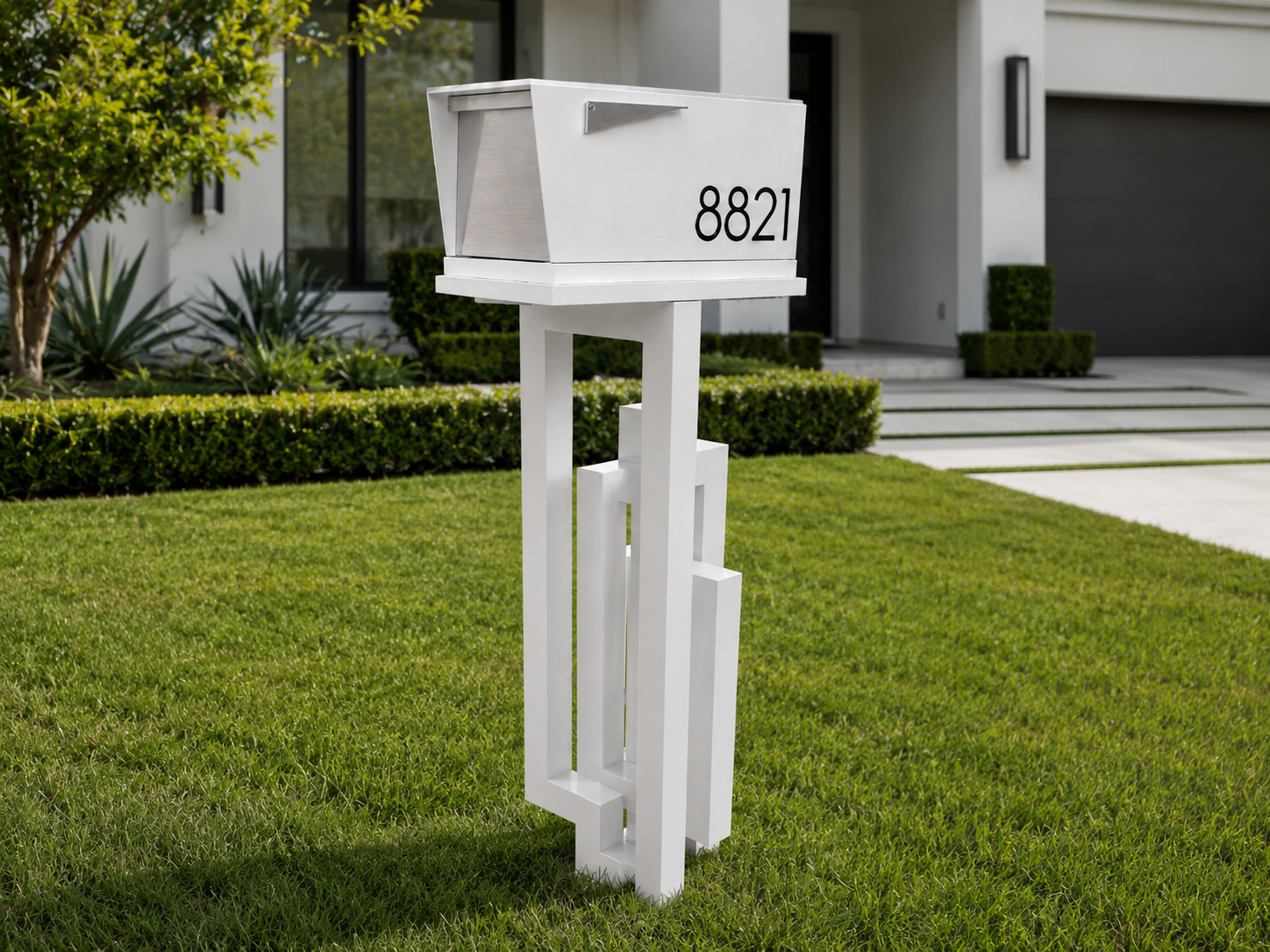
For contemporary and modern homes, prioritize clean lines, stark geometry, and minimal ornamentation. A sleek, post-mounted aluminum mailbox in a matte black or brushed metal finish provides the necessary contrast without adding visual clutter.

For traditional and coastal architecture, softer edges and integrated details often perform better. A custom design that incorporates subtle curves or a color palette drawn directly from your home’s exterior trim can bridge the gap between the street and the front door.

Coordinate Materials and Finishes
A custom mailbox should be built to withstand the elements while complementing your home’s existing textures. In coastal environments, durability is just as critical as aesthetics.
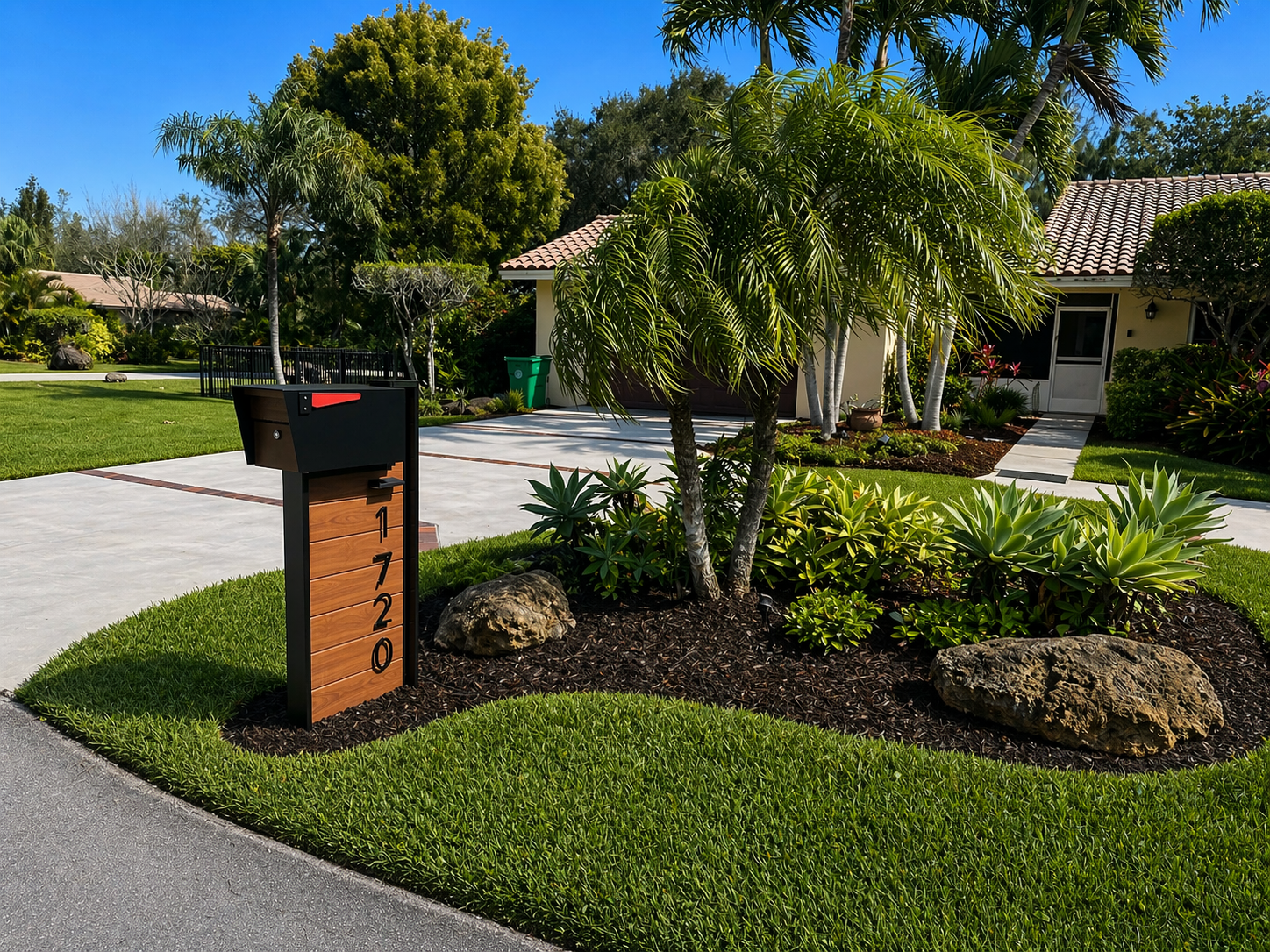
Select materials that mirror the finishes found on your property. If your home features dark window mullions and modern ironwork, a hand-crafted aluminum mailbox with a matching powder-coated finish will create a cohesive look. If your exterior relies on natural stone or warm wood accents, consider a design that incorporates contrasting panels or a softer colorway to tie the landscape together.


For a durable modern option, explore Tailor Mail’s hand-crafted aluminum collection, designed for the demands of Southeast Florida’s climate.
Scale and Proportion
A mailbox must balance its functional requirements with the scale of its surroundings. A massive, imposing structure may overwhelm a modest mid-century entryway, while a delicate, understated post might disappear entirely against a sprawling luxury estate.
Consider the visual weight of the mailbox in relation to your driveway, fencing, and mature landscaping. A substantial, architectural post design often works well for properties set far back from the street, while a streamlined, low-profile silhouette is ideal for homes where the mailbox sits closer to the primary structure.

Personalize with Address Numbers
Address numbers are a crucial design element that serves both a practical and aesthetic purpose. The typography you choose should align with your home’s era and style.
- Modern and Contemporary: Select large, sans-serif fonts in a contrasting color (such as white on matte black) or illuminated LED numbers for a bold, high-visibility statement.
- Traditional: Opt for classic serif typography or subtly integrated plaques that reflect established neighborhood aesthetics.
Ensure that the numbers are clearly visible from both directions of traffic, meeting both aesthetic goals and practical delivery needs.

Verify Placement and Compliance
Once you have selected a design that elevates your home’s architecture, it is essential to ensure it meets official placement requirements. A beautiful custom mailbox must still function efficiently for daily mail delivery.
Before finalizing your installation plan, review the exact height, setback, and structural requirements mandated by the U.S. Postal Service. For a detailed breakdown of these regulations, read our complete guide on How to Design a USPS-Compliant Custom Mailbox.

[Video Placeholder: Landscape installation video pending re-upload]
Ready to Elevate Your Curb Appeal?
Your home deserves an entryway that reflects its true character.
By coordinating style, materials, scale, and typography, you can create a custom mailbox that serves as a seamless extension of your architecture.